The Mississippi Department of Wildlife, Fisheries, and Parks (MDWFP) has been collecting data on black bears for more than 20 years, helping to monitor population growth and health. Reproductive data, gathered through a process called den checks, is key to understanding these trends.
During den checks, a GPS-collared female bear, or sow, is sedated in her den. Researchers then briefly measure, weigh, and examine her cubs for overall health. This information helps build a detailed genealogy of individual bears over time, according to MDWFP.
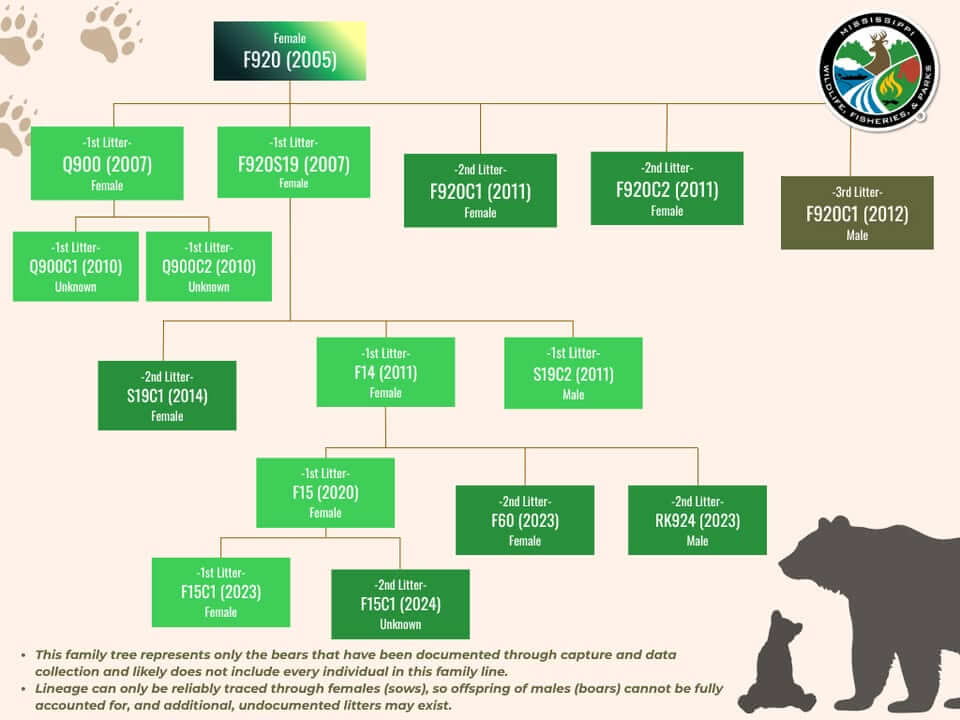
One example is a bear known as F920, first collared in 2005 after migrating from Louisiana. Her lineage has been traced through five generations, and several bears from this lineage are still being tracked today, MDWFP said.
MDWFP officials emphasized that decades of research provide vital data for conservation efforts. The ongoing tracking efforts continue to yield insights into black bear populations and their health across Mississippi.