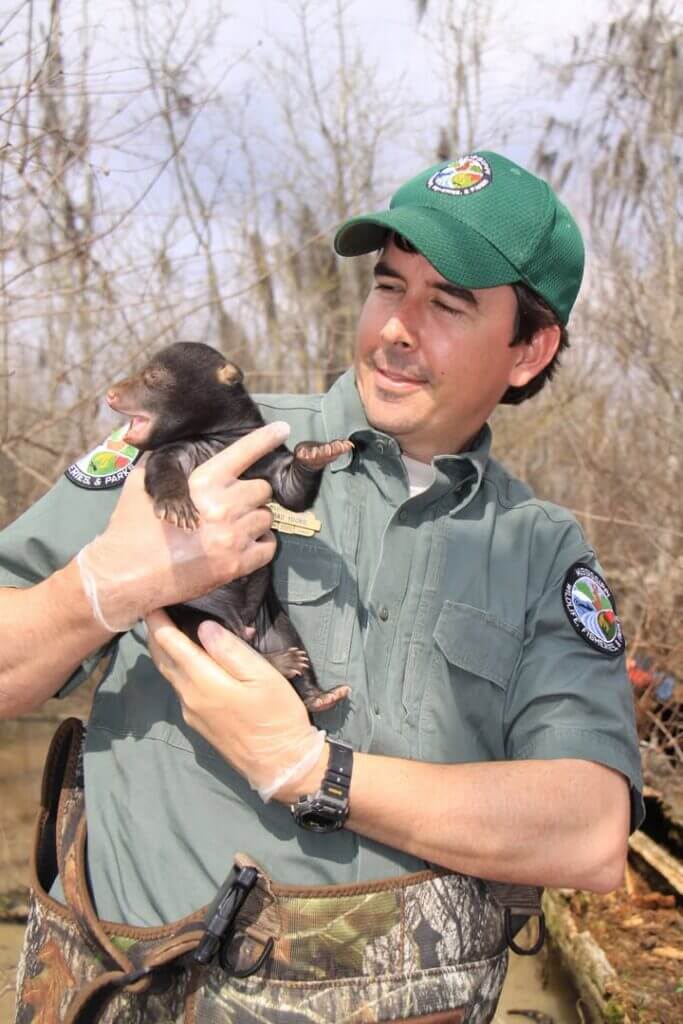
Mississippi’s Black Bears Make Comeback After Near Extinction
Mississippi’s black bears, once abundant in the state’s bottomland hardwood forests, have experienced a significant recovery after near extinction. Historically, the bears supported Native American life, fueled trade, and became part of Delta hunting culture.
By 1932, overhunting and habitat loss reduced the population to fewer than 12 bears, according to the Mississippi Department of Wildlife, Fisheries, and Parks. Conservation measures, including federal and state protections, were enacted over subsequent decades. The federal Threatened and Endangered Species Act of 1974 and state protections in 1992 helped slow the decline.
In 2002, the Mississippi Museum of Natural Science launched a black bear program focused on research and monitoring. Initial efforts tracked bears, studied their habitat use, and aimed to understand the shrinking population, which was estimated at 20 to 40 bears at the time.
The program, now managed by the Mississippi Department of Wildlife, Fisheries, and Parks, expanded efforts to habitat management and cross-state coordination. Natural expansion from surrounding populations contributed to the growth, which reached an estimated 100 to 120 bears within the first decade.
Nearly 20 years later, conservation, habitat stewardship, and dedicated management continue to support the bears’ recovery. Experts say the population is steadily returning to healthy levels as efforts persist.
The department encourages the public to follow their updates on Bear Week and ongoing conservation initiatives.
Source: Original Article